
MEET TEAM OCEAN’S LATEST RECRUIT: HANS HENKEN
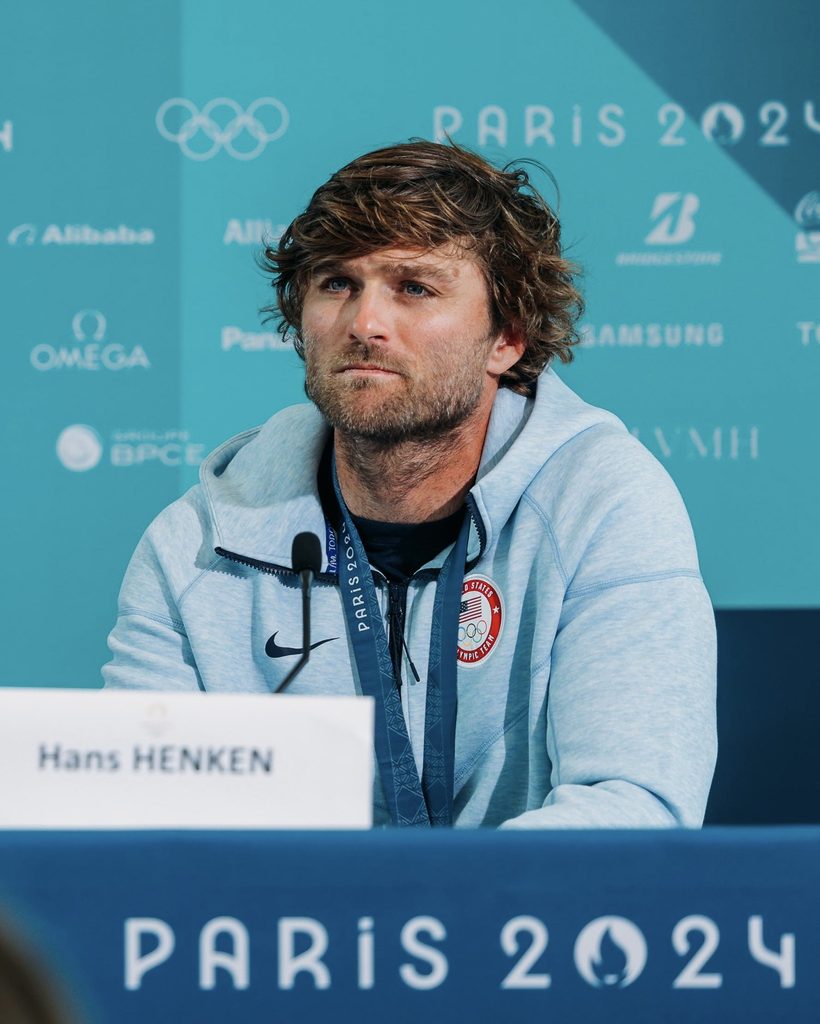
We’re thrilled to welcome sailing champion Hans Henken as our newest Team Ocean Captain! He is an Olympic medalist and professional sailor from San Clemente, California where he began sailing at six years old. Keep reading to learn more about his unique perspective and interest in ocean health!
A: For me, it comes from spending my entire life on the water. Sailing has taken me to some incredible places around the world, but it has also made me very aware of how dependent our sport, and lives, are on a healthy ocean. The ocean isn’t just the place where I compete. It’s where I have learned, explored, traveled, and experienced some of the most meaningful moments of my life. As sailors, we have a pretty unique relationship with the ocean because we see it up close and spend so much time in it. That creates a responsibility. I want to help protect the places where we play so that the next generation gets to experience the same thing. That’s what really attracted me to the Protect Where We Play mission and to becoming an Ocean Captain. I don’t see conservation as something separate from sailing. It’s part of protecting the future of the sport and the places that make it possible.
Q: Our ocean inspires 50% of global tourists to travel to coastal areas. In all the coastal places you’ve been in throughout your career, where has been one of the most unique opportunities you’ve had to visit, and how did that impact you?
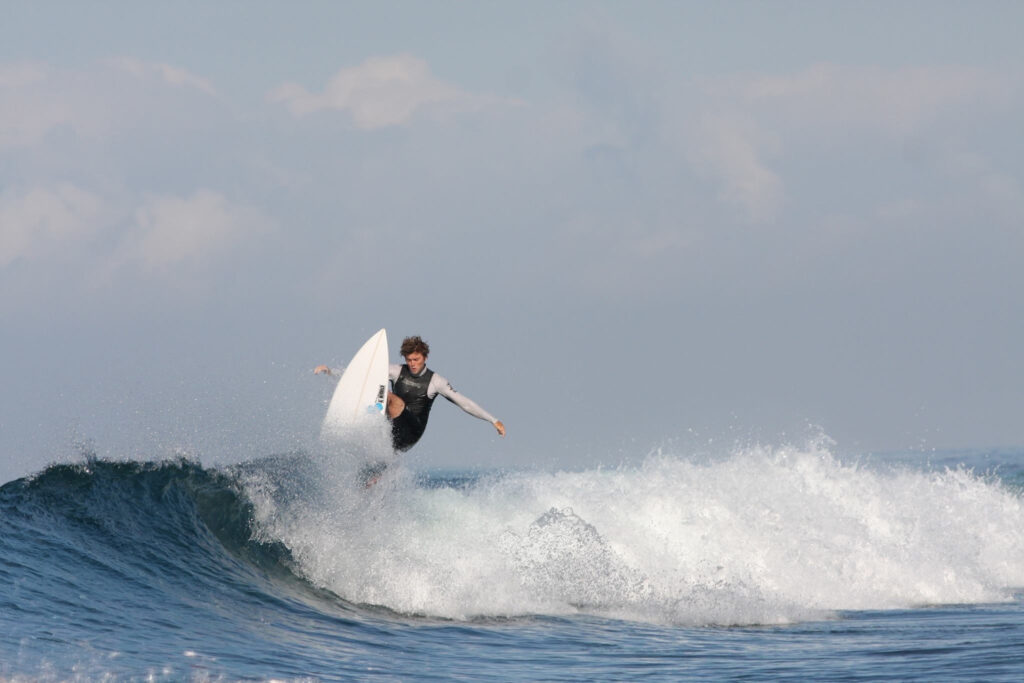
A: One of the places that has stayed with me most is Enoshima, Japan, where I spent a lot of time preparing for the Tokyo Olympic Games. I got to experience the area not just as an Olympic venue, but as a community deeply connected to the ocean. What was particularly interesting was seeing how many different ways people were using and depending on the same stretch of water. We were using the exact same bay to train and race for the Olympics that local fishermen were using to make their living and provide for their communities. For us, it was a place to compete and pursue an Olympic dream; for them, it was a workplace and a source of livelihood. Just around the corner in Fujisawa, the coastline was centered around surfing and other water sports, while nearby Kamakura had a huge amount of tourism built around the beach and ocean. I think it highlighted again for me just how many different ways the ocean provides for people. It was a source of livelihood for fishermen, a place to compete for sailors, a playground for surfers, and a destination for tourists, all within a relatively small area. Enoshima is one of many places that showed me just how much the ocean means to different people, and why protecting it matters. We may all interact with the ocean differently, but we’re all depending on it every single day.
Q: Your academic background is in aeronautical and astronautical engineering. It’s super impressive—how does that influence your perspective on ocean protection?
A: Engineering has taught me to think about problems as systems. The ocean is an incredibly complex system. You can’t really isolate one problem and expect to solve it without understanding how it interacts with everything else: ecosystems, human behavior, technology, economics, and policy. It has also taught me to be curious and to look for solutions rather than just identifying problems. I’m naturally drawn to questions like: What is causing this? What can we change? How do we make an impact? How do we measure whether we’re actually making things better? That mindset is useful in sailing, but I think it’s equally valuable when thinking about conservation. Protecting the ocean isn’t just about caring about it. We need to understand the problems, develop practical solutions, and then put in the hard work to create meaningful change. That’s the kind of challenge I’m excited to take on through Ocean Conservancy.
Q: You’ve talked about how important it is to visualize success in your sport. In your mind, what does a world that cares more for our ocean look like?
A: I picture a world where caring for the ocean isn’t something we have to think about as a separate environmental issue. It’s simply part of how we live and make decisions. For me, success would be being able to go sailing decades from now and see healthy coastlines, clean water, abundant marine life, and young sailors experiencing the same sense of freedom and possibility that I have experienced, knowing that the ocean they depend on will be there for generations to come. I also think it means changing the mindset from asking, “What can we take from the ocean?” to “How do we make sure the ocean continues to thrive?” The ocean has given me an incredible amount throughout my life. A world that cares more for it is one where we recognize that relationship as reciprocal. We get to enjoy and benefit from the ocean, but we also have a responsibility to take care of it.
“The ocean has shaped nearly every part of my life, from how I grew up to the places I’ve been fortunate enough to compete. I’ve spent my life being challenged by it, learning from it, and forming relationships with people I never could have imagined meeting without it. The older I get, the more I realize that it’s not just about what we accomplish, but what we leave behind. I feel a responsibility to give something back to the place that has given me so much. I’m excited to join the Ocean Conservancy initiative because I want to use my platform to help protect the ocean, raise awareness, and hopefully inspire more people to take action so future generations have the opportunity to form their own connection with this incredible playground.”
—Hans Henken, Olympic Medalist and Professional Sailor
Q: Can you share one song for the perfect day out on the water? We’re working on a Protect Where We Play(list)!
A: Lord Huron’s song Ends of the Earth. I think the song captures the feeling of adventure, exploration, and chasing the horizon, which is pretty much the perfect soundtrack for a day on the water.
Q: In the future, when a young sailor trims their sails for the first time, what do you want that experience to feel like? What legacy are you actually sailing towards?
A: I want them to feel the same thing that drew me to sailing in the first place: freedom, curiosity, and the feeling that there is an entire world out there to explore. But I also want them to inherit an ocean worth exploring. That’s ultimately the legacy I’m interested in. I’ve been incredibly fortunate to make a career out of something I love, and I don’t want the opportunity to end with my generation. I want to help make sure that the places we sail, train, and compete remain healthy and accessible for the people who come after us. If a young sailor can look out at the water, feel that same sense of possibility, and not take a healthy ocean for granted, then I think we’ve done something worthwhile. For me, that’s what “Protect Where We Play” means. It’s about recognizing that the places that give us so much also deserve something from us in return.
It’s time to dive in! By joining Hans and taking action to #ProtectWhereWePlay, you’re protecting the ocean and the future of the sports and entertainment we all love.
