
A BLOG BY TEAM OCEAN CAPTAIN LEE WHITWELL
There is a particular kind of tunnel vision that comes with being a professional athlete, and the thing is, you train for it. You narrow your world down to the dimensions of a court, a field, a lane, whatever your arena is, and you pour everything you have into that small rectangle of existence. Wins are oxygen, and losses feel like the sky caving in.
I know that feeling intimately—the match where you handed it over, the one where you left every single thing you had out there and your opponent simply had a slightly better day. Sport is brutal in that specific way, because the margin between glory and devastation is sometimes so thin you could slide a credit card through it. And in the moment, it is absolutely the be-all and end-all; your entire identity sitting out there on the court for everyone to see.
Then you go home, you sleep and you wake up.
And the world is still turning.
Here is what nobody tells you when you sign up for the life of a professional athlete: You are the only one keeping score after the scoreboard goes dark. The loss that felt catastrophic at 6:00 PM is, by morning, just a data point, because everyone else has moved on. They are eating dinner and watching TV, and they have absolutely no idea you are lying in bed replaying point 17. Perspective is a quiet teacher, and unlike your coach, it doesn’t shout. It simply waits.
For me, that perspective has always come from water.
I grew up in Gibraltar, a peninsula where the Atlantic and the Mediterranean meet, two of the world’s great bodies of water colliding at the edge of a two-mile rock that somehow managed to produce me. From childhood, the ocean wasn’t a destination; it was just there, constant and indifferent to whether I’d won or lost, performed well or fallen apart. The sea has a particular genius for that, an absolute refusal to be impressed by your results, and the ocean does not care about your backhand. Not even a little bit.
Standing at the water’s edge after a hard day, then or now, there is this immediate, involuntary recalibration that happens inside you. Marine biologist and author Dr. Wallace J. Nichols coined the term “blue mind” to describe exactly this: The measurable shift in brain state that occurs near large bodies of water, with reduced cortisol, a slower heart rate, and the nervous system finally exhaling. His research makes the scientific case for what people who grew up near the ocean already know in their bones: The water changes you, it resets something fundamental. I don’t need convincing because I have lived it my entire life.
The ocean makes you feel small—but not insignificant small, not crushed small, rather correctly small, the kind of small that is actually a relief, the kind that makes you realize your third-shot drop percentage is perhaps not the most pressing issue on the planet.
Because here is the truth of it: We all need reminding that there is a world out there which has nothing to do with our rankings, our results or our personal narratives of success and failure. A world, and an ocean, that predate us by 3.8 billion years and, if we are not careful, will outlast us without much fuss.
Except that they won’t. Not without our help, and not anymore.
The ocean that recalibrated me as a child, that corrected my athlete’s tunnel vision and gave me back my proportion, is under assault in a way that has no historical precedent. We are warming it, acidifying it, filling it with plastic at a rate of roughly 11 million metric tons every year. We are bleaching the coral reefs that sustain a quarter of all marine species through warming ocean waters. We are collapsing fish populations that billions of people depend on for protein. We are disrupting the currents that regulate the climate of entire continents. The ocean produces over half the oxygen you breathe. It absorbs nearly a third of all carbon dioxide emitted by human activity. It is not a backdrop. It is the mechanism by which this planet supports life.
Including yours. You’re welcome.
I am honored to serve as an Ocean Conservancy Team Captain for their Protect Where We Play campaign, because I think athletes have a platform we consistently under-use; not for lack of caring, but because we are so conditioned to keep our heads down and focus on the next match that we forget we are also citizens, and we forget that the tunnel vision that serves us so well on the court can make us fairly useless everywhere else.
The ocean taught me to look up.
My partner Angela has spent years in the water and behind the camera lens documenting what we stand to lose, from coral systems and marine ecosystems to the extraordinary fragile beauty of what lives below the surface. Her work has contributed to the federal protection of the Chumash Heritage National Marine Sanctuary, and she has seen up close what I have always known from the shoreline: this is not abstract, and this is not a future problem. The degradation is happening now, in real time, in the very places that have always made us feel most alive.
The athletes reading this know the discipline required to show up for something day after day, especially when results are slow and the work is unglamorous and hard. Conservation requires exactly the same discipline, because the ocean does not need our sentimentality, it needs our consistency. It needs us to show up for it the way we show up for training, not once, not when it’s convenient, but as a daily practice.
Go stand at the water’s edge, let it make you small and then come back and do something about it.
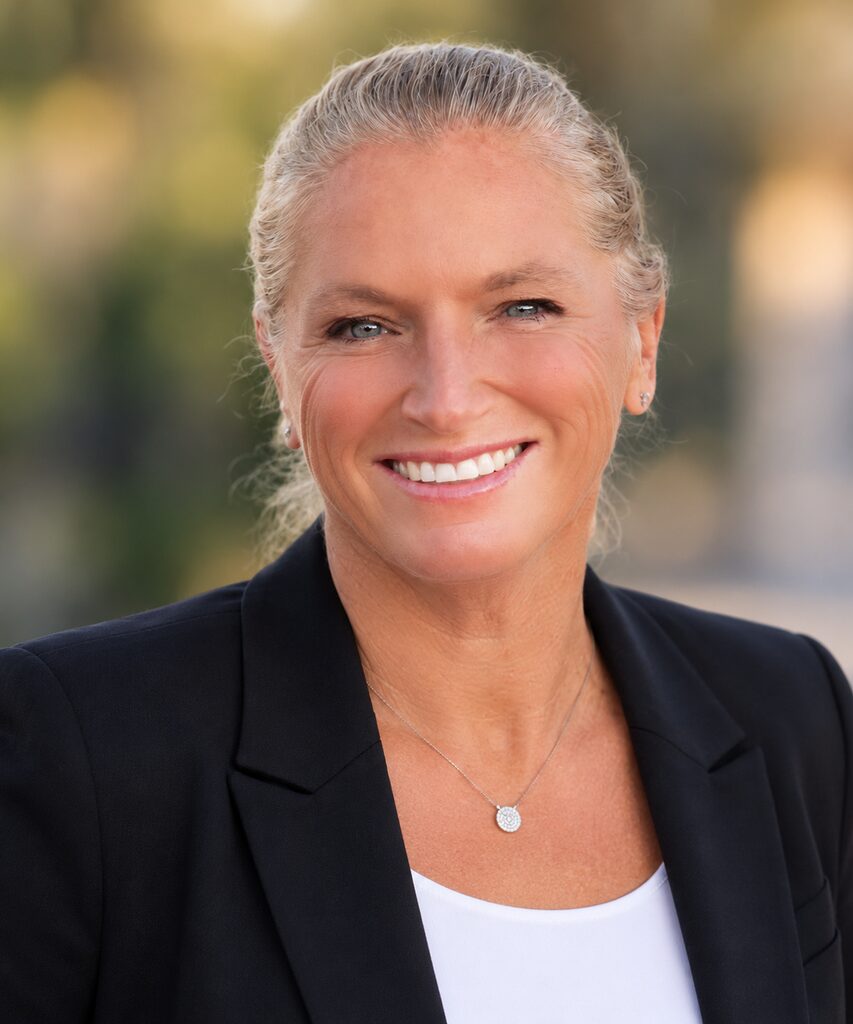
Lee Whitwell is a World #1 Senior Female professional pickleball player, co-founder of Game ChangeHER Events, author and Protect Where We Play Team Ocean Captain.
